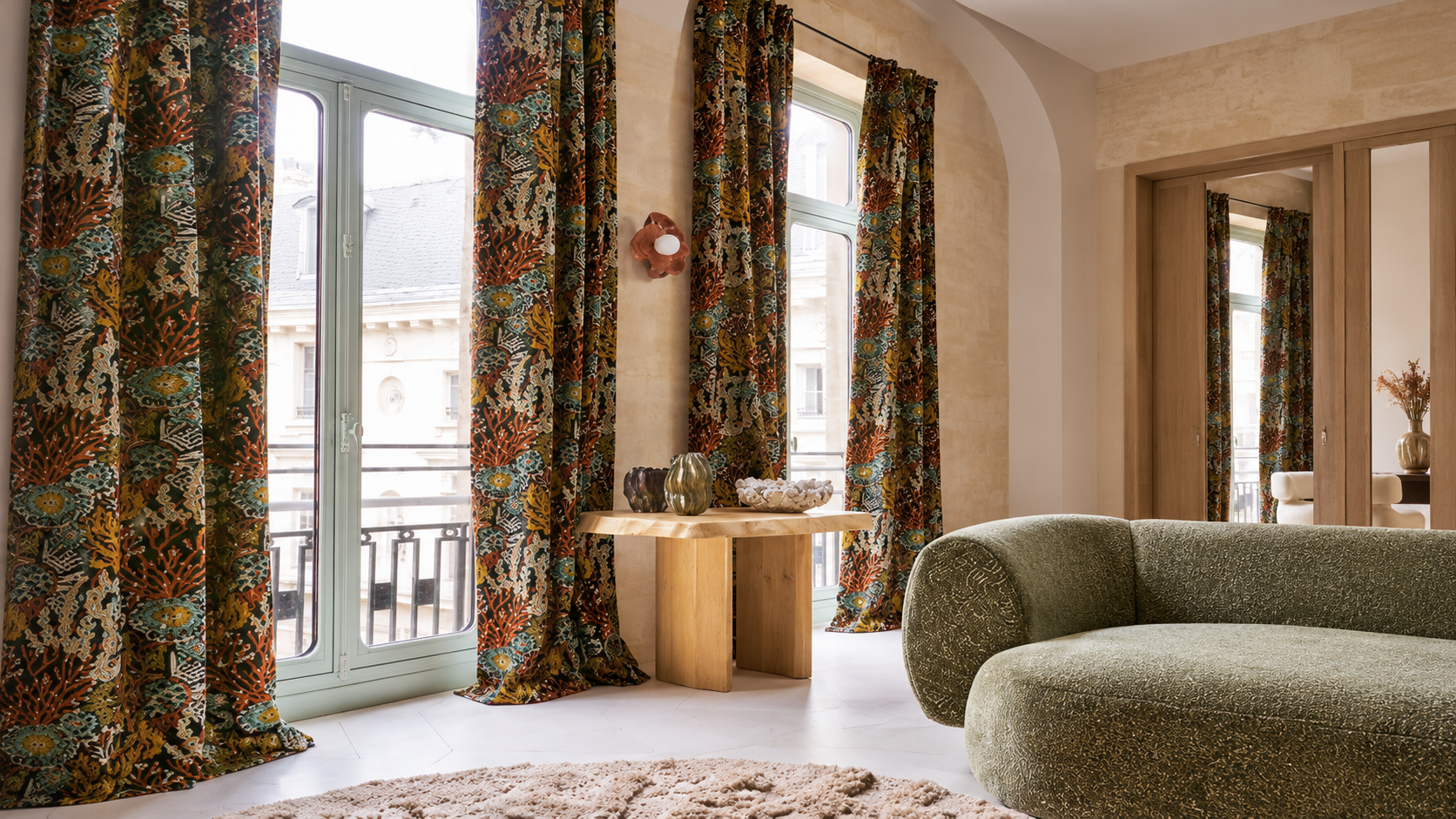
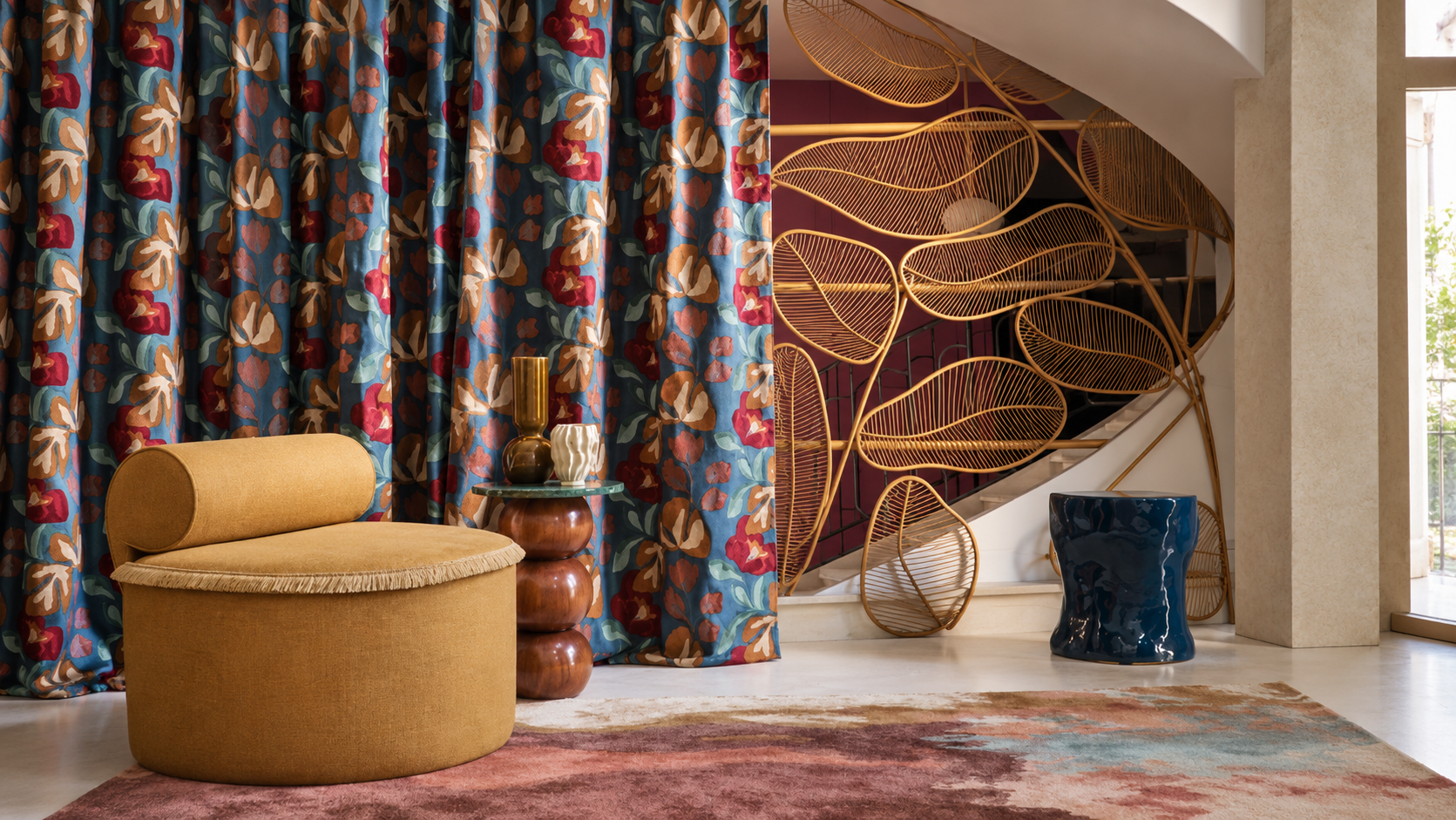
Types of Curtain Fabrics and How to Choose the Right One for Your Home
Eight fabrics. Very different outcomes. Most people pick by colour then wonder why the curtain doesn’t quite work. Here’s how to decide before you decide on colour. Because the fabric determines how a curtain hangs, how it filters light, how it ages and how a room feels at 7am versus 9pm. Get that right first and everything else follows. This guide covers every curtain fabric type worth knowing what it does, where it works and what to pair it with. Whether you’re furnishing one room or an entire home, the decision starts here.
There's a reason designers always ask about fabric before pattern, weight before colour. Curtains are one of the few things in a room that change every time the light does morning sun, afternoon glare, evening lamplight and the fabric determines every single one of those moments. Get it right and the curtain disappears into the room in the best way. Get it wrong and it just sits there, doing nothing interesting.
This curtain fabric guide runs through the eight types of curtain fabrics that matter, what each one does, and which rooms they're actually suited to. It also covers the three design houses Casamance, Dedar and Rubelli whose fabrics you'll find at our curtain showroom in Kotturpuram, because knowing the source matters when you're making a long-term investment in a space.
The material guide
The 8 Types of Curtain Fabrics
Not all curtain fabric types perform the same way.
Each has a specific light behaviour, drape quality
and room fit. Here's the complete breakdown.
Silk
The most light-reactive curtain fabric there is. Silk
catches light at different angles throughout the day
and shifts in tone as the light changes. It is the only
fabric that does this convincingly. Best for formal
living rooms and dining rooms where it will not take
direct sunlight, which weakens silk fibres over time.
Always line it. Silk curtain fabric paired with blackout
lining gives you drama plus full light control.
FormalLight-reactive
Linen
The default choice for premium interiors, and with
good reason. Linen curtain fabric has a natural texture
that adds depth without competing with anything else
in a room. It drapes with an easy, slightly relaxed
weight and breathes, making it genuinely useful in
rooms with cross-ventilation. Available from fine voile
to heavy linen-cotton blends. Works in almost every
room, in almost every style of interior.
VersatileBreathable
Velvet
Velvet curtain fabric absorbs light rather than
reflecting it, giving it depth of colour. It also
insulates well and blocks light better than almost
any unlined fabric. The trade-off is care: velvet marks,
needs proper storage and requires professional cleaning.
Worth it for bedrooms, home theatres and formal living
rooms where you want a room that feels genuinely
different at night. Not a casual choice, and should
not be.
DramaticInsulating
Sheer
Sheer curtain fabric includes linen voile, cotton voile
and fine polyester. It diffuses light without blocking
it. The room stays bright while glare softens. Often
used as the front layer on a double track, with a
heavier fabric behind it when you need full privacy.
See our
blinds and tracks
for how double-track systems work. Sheers are the
reason a room can feel airy and still feel intentional.
Light-filteringLayerable
Blackout
Blackout curtain fabric is tightly woven or coated to
block light almost completely. It is essential for
bedrooms, home theatres and children's rooms. Modern
blackout fabrics look considerably better than they
once did, with textures and colours that sit naturally
alongside a premium interior. Often paired with a sheer
voile on the same double track for flexibility between
day and night.
Light-blockingPractical
Brocade & Damask
Pattern woven into the cloth itself, not printed on
top. That is the distinction that matters. Brocade
and damask hold their shape, hang with formality and
bring a distinctive presence to a room. Best in
classical or richly furnished interiors. Rubelli's
range includes silk brocades and lampas with patterns
that have been in continuous production for centuries.
StructuredTraditional
Cotton & Cotton Blends
The practical workhorse. Cotton curtain fabric is
durable, easy to maintain and comes in a wide range
of weaves, weights and finishes. Cotton-linen blends
give you natural texture with added durability.
Cotton-polyester blends add drape. A sensible choice
for family rooms, children's rooms and kitchens,
where ease of care matters as much as appearance.
EverydayEasy care
Chenille & Textured Weaves
The right choice when a room has too many hard
surfaces. Chenille absorbs sound, adds visual warmth
and looks particularly good against stone floors,
glass and metal furniture. It can soften the acoustics
of a room, with options ranging from lighter decorative
weaves to heavier versions used almost as room dividers.
The tactile quality is immediately noticeable.
TactileAcoustic
The Brands Behind Premium Curtain Fabric
Understanding curtain fabric types is one half of the decision. Understanding where the best of each comes from is the other. These three houses all available at our premium fabric showroom in Chennai each have a distinct point of view on what premium curtain fabric should do.
Casamance
France · Est. 1976
Known for colour intelligence more than anything else.
Casamance fabric collections are built around natural
palettes with unexpected accent tones, considered rather
than obvious. Their linen voiles, printed cottons and
embroidered weaves have a handcrafted quality that shows
in the hang and in how they age over time. Collections
like Lanzea, Iridis and The Lost Garden span the full
range from delicate sheers to dramatic printed panels.
Dedar Milano
Italy · Est. 1976
Italian textile craft at its most contemporary. Dedar
fabric uses traditional techniques such as brocade,
lampas and jacquard, but the colour sensibility is
modern and precise. Their curtain weights are engineered
to fall with exactness. The collections are among the
few where the textile itself feels like an art object.
Romeo & Giulietta and How Soon Is Now? are among
the most distinctive currently in production.
Rubelli
Italy · Est. 1858
One of the oldest textile houses in Venice, with
continuous production of silk velvets, satins, damasks
and lampas since 1858. Rubelli fabric takes centuries-old
techniques and recolours them for contemporary rooms.
Ripple, Aurora and Sunrise are recent examples that bring
light and movement to curtains in a way synthetics cannot
replicate. For rooms where the curtain is the point,
not just the frame.
"The fabric determines how a curtain behaves every time
the light changes, from morning sun to afternoon glare
and evening lamplight. Choosing by colour alone is
choosing one of those moments and hoping the others
work out."
How to Choose Curtain Fabric by Room
Every room has a specific set of requirements. Light conditions, humidity, how the room is used, and what other materials are in the space all narrow the choice. This table is a starting point not a prescription.
Room
Primary need
Fabric to consider
Living room
Style, moderate light control
Linen, velvet, linen-cotton blend, brocade
Bedroom
Light blocking, warmth, privacy
Velvet, blackout-lined silk, blackout weaves
Dining room
Formality, visual presence
Silk, damask, cotton-linen
Home office
Glare control, acoustic softening
Sheer voile + blackout layer, chenille
Children's room
Light blocking, washability
Cotton blend, blackout cotton
Kitchen
Easy care, moisture resistance
Cotton, polyester blend, linen
Curtain Fabric for Living Room: What Usually Works
Living rooms are where most people agonise longest, because the room is used across the full day and needs to look good in every light condition. Curtain fabric for living rooms works best when it has some weight to it enough to hang properly without a stiff lining and a neutral or warm base that doesn't fight the evening lamp tones.
Linen and linen-cotton blends are the most forgiving starting point. Velvet is the most impactful upgrade. For rooms with south or west-facing windows, a sheer voile layer on a double track with a linen or blackout panel behind gives you the most flexibility across the day. If your living room has high ceilings above 3 metres always go for fabric with visible weight; lightweight sheers at that height look sparse rather than airy.
On Lining: The Decision Most People Leave Too Late
Lining affects drape, light control, longevity and insulation and it's almost always decided as an afterthought. It shouldn't be. Standard lining adds weight and a clean back. Blackout lining gives you light control without needing a blackout face fabric so you can have a beautiful silk or linen panel that also functions as a blackout curtain. Thermal lining adds insulation. Interlining a soft wadding layer gives curtains a full, sculpted look that is the mark of properly made curtains.
At our premium curtain showroom in Chennai, lining is part of every fabric consultation as standard. The right lining transforms the fabric's behaviour completely.
Visit the showroom
Experience Casamance, Dedar and Rubelli in Chennai
Experience full fabric drops in natural light across our
25,000 sq. ft. showroom. Our team will help you select
the right fabric, weight and lining for your space.
What is the best curtain fabric for a living room?
Linen or linen-cotton blends are the most versatile starting point they work across lighting conditions, age well and come in enough weights to suit most spaces. For a more dramatic result, velvet. The right answer depends on the room's light exposure, ceiling height and the other materials in the space. Always see a full drop sample before deciding; flat swatches don't show you enough.
How do I choose between sheer and blackout curtain fabric?
You don't have to choose. A double track with sheer curtain fabric at the front and blackout curtain fabric behind gives you complete flexibility full light and privacy at night, diffused natural light during the day. If you're running one layer only, choose based on the room's primary function: blackout for bedrooms and home theatres, sheer for living areas where natural light is the point.
Is Casamance fabric suitable for Chennai’s climate?
Most Casamance fabric is natural fibre linen, cotton, and blends which handles humidity reasonably well when properly lined. Their linen voile collections are specifically designed to move with air, which makes them well-suited to rooms with natural ventilation. Avoid pure silk face fabrics without lining protection in high-humidity rooms; lined silk handles it significantly better.
What makes Dedar and Rubelli different from standard curtain fabrics?
Both use traditional weaving techniques jacquard, brocade, lampas that build pattern and texture into the cloth structure rather than printing on top. The difference is visible in how the fabric drapes and how the colour reads in different light. Dedar fabric sits within a contemporary sensibility; Rubelli fabric is rooted in Venetian silk heritage. Both are long-term investments fabrics that outlast the rooms they're hung in.
Where can I see premium curtain fabric in Chennai before buying?
Decorgeous in Kotturpuram carries Casamance, Dedar Milano, Rubelli, Atmosphere and Royal Elizeh across a 25,000 sq.ft. showroom. Seeing fabric in full drop in real light conditions, next to real finishes is the only way to make a confident decision. We recommend booking an appointment so our team can pull samples relevant to your specific room and budget.